

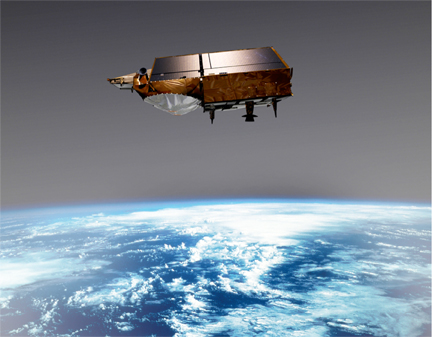
CryoSat-2 satellite
Approximately, 17 minutes after launch the spacecraft separated from the upper stage and sent its first signals to the Malindi (Kenya) ground station. CryoSat-2 will measure the ice coverage at the Earth's poles with previously unattained precision for at least the next three and a half years. Its predecessor —- CryoSat-1 — was lost in 2005 due to a failure of the launcher. The CryoSat mission is intended to measure the polar ice sheets and the sea-ice cover which together greatly affect the radiation balance on Earth. If the ice caps of Greenland and Antarctica melt significantly, the runoff could cause changes to the great ocean currents with unforeseen consequences for the world’s climate.
Astrium has been the prime contractor for CryoSat-2 with responsibility for an industrial consortium consisting of approximately 31 companies from 17 countries including Thales Alenia Space for the SIRAL instrument. Astrium in Friedrichshafen built the satellite platform and integrated all the instruments. Astrium is also responsible to ESA for the satellite’s performance. The industrial contract is valued at approximately €75 million. Astrium was also responsible for the satellite’s launch.