

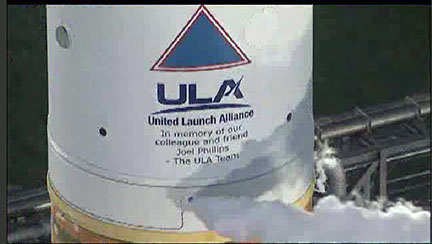
The Delta IV rocket was dedicated to a longtime ULA employee, Joel Phillips, in memory of our colleague and friend. The ULA Team
[SatNews] A perfect launch of ULA's Delta IV rocket that was dedicated to the memory of a friend and colleague.
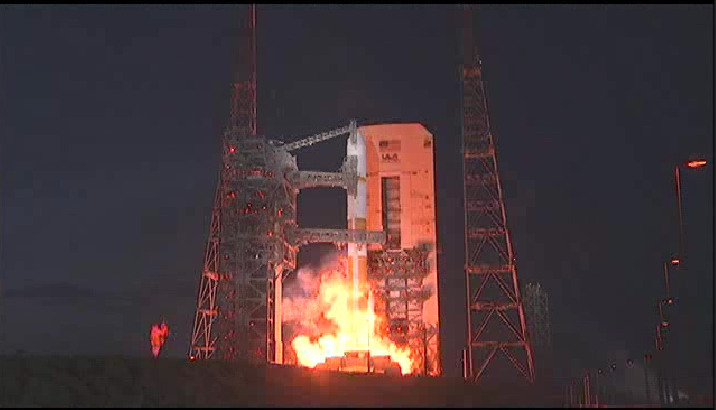
Get ready...
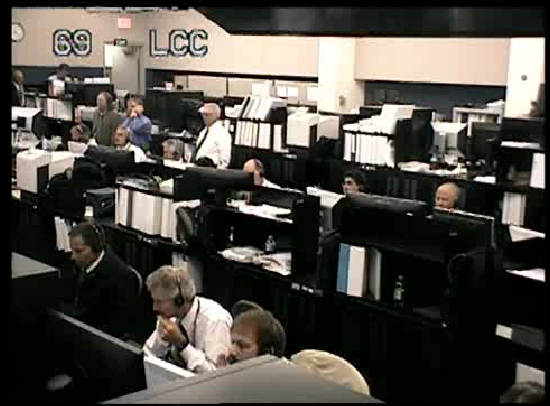
Mission control in final countdown.
Unique to this launch is the partnership with the Australian Defence Force. In November 2007, Australia signed a bi-lateral Memorandum of Understanding (MOU) with the United States to join the WGS program. Through this agreement, Australia provides funding for the procurement, sustainment, and launch costs associated with the sixth WGS satellite, in return for assured bandwidth across WGS 1-6. WGS enables reliable, secure satellite communications providing the ability to conduct multiple and simultaneous military operations both independently and as part of a coalition force.

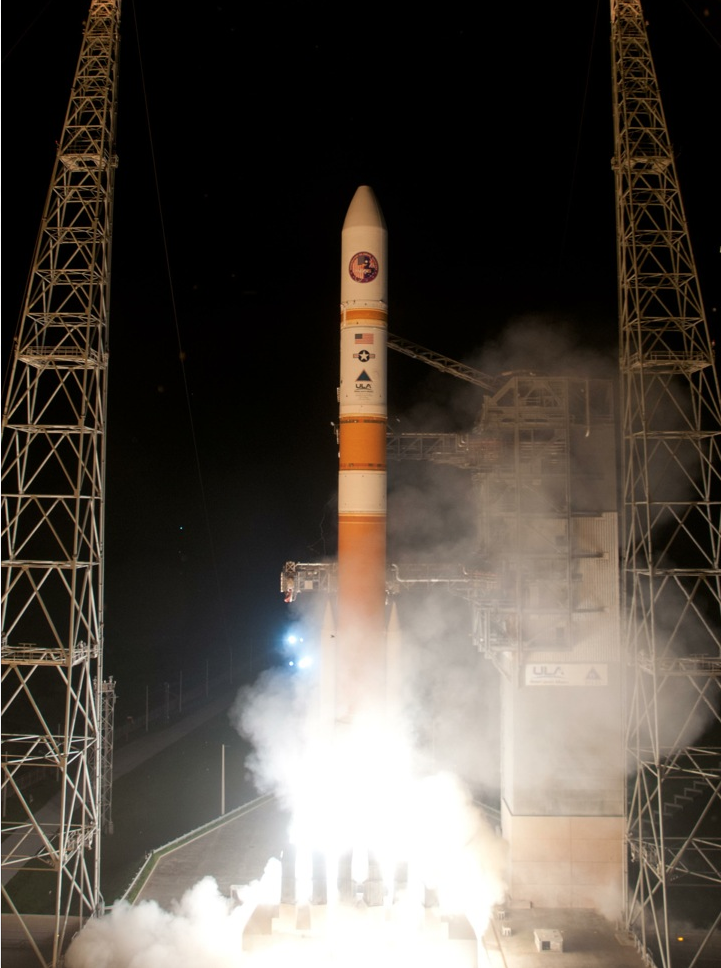
Cape Canaveral Air Force Station, Fla. (Aug. 7, 2013) – A United Launch Alliance Delta IV rocket successfully launched the sixth Wideband Global SATCOM (WGS-6) satellite for the U.S. Air Force at 8:29 p.m. EDT today from Space Launch Complex-37. This is ULA’s seventh launch in 2013, the 73rd launch since the company was formed in December 2006, and the second WGS mission launch this year. Wideband Global SATCOM provides anytime, anywhere communication for the warfighter through broadcast, multicast, and point to point connections. WGS is the only military satellite communications system that can support simultaneous X and Ka band communications. Photo by Pat Corkery, United Launch Alliance
Statement from ULA...
United Launch Alliance Successfully Launches Second Wideband Global SATCOM Mission for U.S. Air Force in Less Than Three Months
Cape Canaveral Air Force Station, Fla., (Aug. 7, 2013) – A United Launch Alliance (ULA) Delta IV rocket successfully launched the sixth Wideband Global SATCOM (WGS-6) satellite for the U.S. Air Force at 8:29 p.m. EDT today from Space Launch Complex-37. This is ULA’s seventh launch in 2013, the 73rd launch since the company was formed in December 2006, and the second WGS mission launch this year.
"Congratulations to the entire team on today’s successful launch of the WGS-6 satellite. As with the previous five WGS missions, we have enjoyed a very strong partnership with the Air Force and all of our missions partners throughout this launch campaign,” said Jim Sponnick, ULA vice president, Atlas and Delta Programs. “We were honored to launch the first two WGS satellites on our Atlas V vehicle and the next four satellites in the constellation on our Delta IV vehicle, delivering critical communications capability to orbit to support our nation’s warfighters throughout the world.”
This mission was launched aboard a Delta IV Medium-plus configuration vehicle using a single ULA common booster core powered by an Aerojet Rocketdyne RS-68 main engine, along with four ATK GEM 60 solid rocket motors. The five-meter diameter upper stage was powered by an Aerojet Rocketdyne RL10B-2 engine with the satellite encapsulated in a five-meter diameter composite payload fairing. The WGS-6 launch marked the fourth flight of the Delta IV medium+ (5,4) configuration and the 23rd flight of the Delta IV family of launch vehicles. “WGS was the first of the constellation of satellites to launch on both the Delta IV and Atlas V vehicles,” said Sponnick. “This team’s ability to integrate and launch satellites successfully and efficiently on two launch systems provides operational flexibility to our customers.”
Wideband Global SATCOM provides anytime, anywhere communication for the warfighter through broadcast, multicast, and point to point connections. WGS is the only military satellite communications system that can support simultaneous X and Ka band communications.
ULA's next launch is the Delta IV Heavy NROL-65 mission for the National Reconnaissance Office scheduled on Aug. 28, from Space Launch Complex-6 at Vandenberg Air Force Base, Calif.
The EELV program was established by the United States Air Force to provide assured access to space for Department of Defense and other government payloads. The commercially developed EELV Program supports the full range of government mission requirements, while delivering on schedule and providing significant cost savings over the heritage launch systems.
ULA program management, engineering, test, and mission support functions are headquartered in Denver, Colo. Manufacturing, assembly and integration operations are located at Decatur, Ala., and Harlingen, Texas. Launch operations are located at Cape Canaveral AFS, Fla., and Vandenberg AFB, Calif.
The Space and Missile Systems Center is the U.S. Air Force's center of acquisition excellence for acquiring and developing military space systems including Global Positioning System, military satellite communications, defense meteorological satellites, space launch and range systems, satellite control network, space based infrared systems, and space situational awareness capabilities.
End of statement from ULA.
Statement from U.S.A.F.
Sixth Wideband Global SATCOM Satellite Launched
LOS ANGELES AIR FORCE BASE, El Segundo, Calif. - The U.S. Air Force's sixth Wideband Global SATCOM spacecraft was launched on a United Launch Alliance Delta IV launch vehicle from Cape Canaveral Air Force Station, Fla. at 8:29 p.m. (EDT) today, the first step in its journey to expand satellite communications services to the warfighter.
The satellite will provide additional wideband SATCOM coverage for U.S. defense forces and International partners, to include Australia, which supported the cost of the sixth spacecraft under a partnership agreement. Over the next few months, Boeing will begin on-orbit testing of the satellite to verify nominal performance and prepare the satellite for operational use. Ultimately, the satellite will be controlled by the U.S. Air Force's 3rd Space Operations Squadron at Schriever Air Force Base, Colo. WGS-6 should enter operations in early 2014.
"WGS is a vital piece of the MILSATCOM enterprise consisting of WGS, DSCS, AEHF, Milstar and terminals," said Ms. Charlotte Gerhart, Chief, Wideband SATCOM Division, MILSATCOM Directorate. "WGS is providing unparalleled global communications capabilities to soldiers, sailors, marines and airmen for the United States, Australia, Canada, Denmark, Luxembourg, The Netherlands, and New Zealand. The continued success of WGS is due to the hard work and dedication from the combined Government and Boeing team."
The Space and Missile Systems Center, located at Los Angeles Air Force Base, Calif., is the U.S. Air Force's center of acquisition excellence for acquiring and developing military space systems including Global Positioning System, military satellite communications, defense meteorological satellites, space launch and range systems, satellite control network, space based infrared systems, and space situational awareness capabilities. WGS supports communications links in the 500 MHz range of the X-band and 1 GHz range of the Ka-band spectra. WGS can filter and route up to 4.875 GHz of instantaneous bandwidth.
End of USAF SMSC Statement
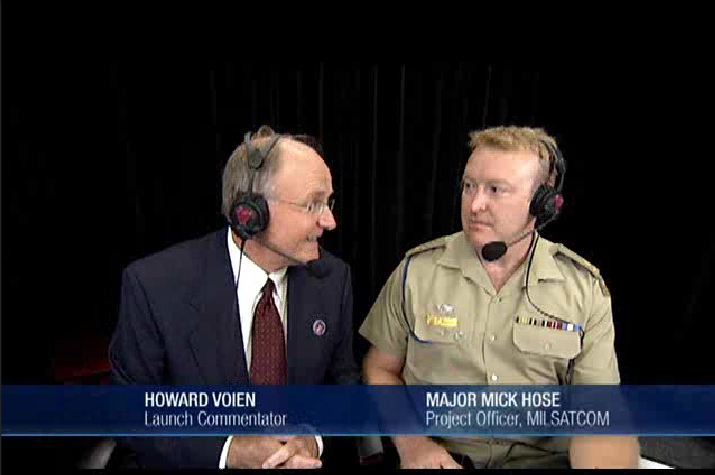
Chatting with Australian Major Mick Hose, Project Officer, MIL SATCOM after this evening's successful launch.
WGS-6, the third Block II satellite, includes a high-bandwidth radio frequency (RF) bypass capability in addition to the previous capabilities provided by the Block I satellites. Depending on the mix of ground terminals, data rates, and modulation schemes employed, a WGS satellite can support data transmission rates between 2.4 and 3.6 Gbps.
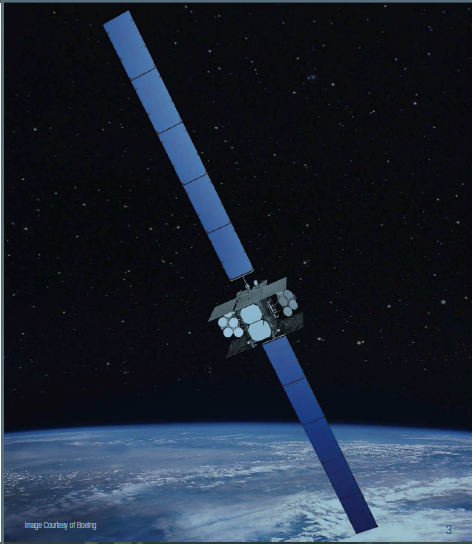
WGS has 19 independent coverage areas that can be positioned throughout its field of view. This includes eight steerable/shapeable X-band beams formed by separate transmit/receive phased arrays; 10 Ka-band beams served by independently steerable diplexed antennas (three with selectable RF polarization); and transmit/receive X-band Earth-coverage beams. WGS can tailor coverage areas and connect X-band and Ka-band users anywhere within its field of view. Four Army Wideband Satellite Operations Centers (WSOC) provide command and control of WGS. Each Global SATCOM Configuration and Control Element (GSCCE) has the capability to control up to three satellites at a time, using X-band or Ka-band telemetry and command links.
Spacecraft platform control is accomplished by the 3rd Space Operations Squadron at Schriever Air Force Base in Colorado Springs, CO, using WGS mission-unique software and databases. Support technologies for WGS include the xenon-ion propulsion system (XlPS), which is 10 times more efficient than conventional bipropellant systems, highly efficient triple-junction gallium arsenide solar cells, and deployable radiators with flexible heat pipes. Four 25-cm XlPS thrusters remove orbit eccentricity during transfer orbit operations. The thrusters are also used to perform orbit maintenance and any required station-change maneuvers during the mission’s life. The triple-junction gallium arsenide solar cells provide on-orbit electrical power for the spacecraft. The deployable radiators’ flexible heat pipes provide increased radiator area, resulting in a cooler, more stable thermal environment for the satellite.