

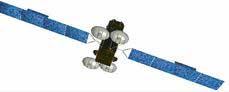
The fleet of advanced Ka-Band satellites will allow Inmarsat to offer its customers fast broadband services in even the most far-flung locations by the end of 2014. With operations expected to start in 2014, Inmarsat-5 will support a next generation global service, Global Xpress, which will target a $1.4bn incremental market opportunity in VSAT services.
Global Xpress will address the established, growing markets for VSAT services in the Maritime, Energy and Government sectors, with further growth potential in developing markets such as the Aeronautical sector. Global Xpress will deliver seamless global coverage and unprecedented mobile broadband with speeds up to 50MB/s, to customer terminals from 20-60cm in size.
"They will provide very high mobile broadband speeds on a global basis to serve high-end customers who have very high data needs," a source said.
The new satellites will offer broadband at speeds up to 20 times faster than Inmarsat's current, ageing, L-band fleet, which operates at the opposite end of the spectrum. The investment, expected to be confirmed today, will be the biggest investment by the British company in a decade. Inmarsat will continue to use its 11 existing L-Band satellites, which provide voice and data services to ships and planes as well as those working in disaster areas or war zones.
Andrew Sukawaty, CEO of Inmarsat said: “This is a new investment for new growth. With the Global Xpress network, we will be the first operator to offer global mobile broadband coverage, offering unparalleled speeds and bandwidth to customers in remote locations around the world. Global Xpress will be faster and less expensive than current Ku-band market offerings, delivered to smaller and cheaper terminals and be the first offered on a seamless, global, end to end basis with high quality of service. Picture 50MB/s services to a ship or aircraft and 10MB/s to an antenna the size of an iPad (20cm).
Inmarsat-5 will also complement our existing global L-band services, allowing us to offer unique hybrid packages using both networks, giving users unprecedented levels of resilience and reliability in remote and harsh environments.”
Analysts at Credit Suisse said demand for services provided by the new satellites is expected to grow substantially over the next decade. "Inmarsat has a particularly attractive opportunity, in our view, to bid for future US government contracts given the recent acquisition of Segovia [a US satellite services company] if it can complement L-Band with higher speed," they said in a recent note. "For Inmarsat to invest in an early Ka-Band capacity would further strengthen its position as market leader in the maritime segment and also strengthen its position in Land VSAT [two-way satellite communications]."
Boeing saw off competition from France's Thales (Paris: FR0000121329 - news) 's space arm to win the order. It is thought the deal will be announced alongside Inmarsat's second-quarter results, which are expected to show earnings before interest tax and depreciation of about $139m compared to $164m in the same period a year earlier. Sales are expected to come in at about $290m compared to $173m last time.
Inmarsat's shares, which have been weighed down by speculation about the mammoth deal, closed 9½ lower at 713p yesterday.
Inmarsat was set up in 1979 as a not-for-profit organisation to create a satellite network for ships. Inmarsat and Boeing refused to comment.
Sources for this article include uk.telegraph and Inmarsat.