

 [SatNews]Europe's new EGNOS Safety-of-Life service has been used for the very first time.
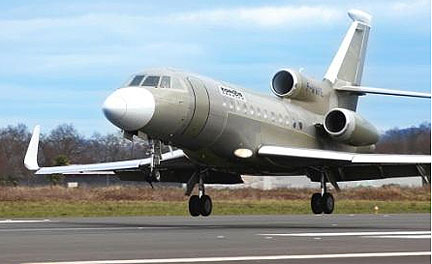
The EGNOS Safety-of-Life Service, as announced by Vice President Tajani, enables precision approaches and renders air navigation safer as well as helping to reduce delays, diversions, and cancellations of flights. The approaches were flown into Pau Pyrénnées airport in France (ICAO: LFBP) on a Falcon 900 LX equipped with ESAy II, the next generation of Dassault's flight deck system. The Pau Pyrénnées EGNOS approach became Europe's first operational LPV approach (Localizer Performance with vertical guidance) on March 2nd, 2011. In order for the EGNOS Safety-of-Life service to be used, aircrafts need to be equipped with an EGNOS-enabled receiver and airports must have EGNOS-specific approach procedures for their runways.
Dassault’s team flew seven approaches during the mission, confirming the accuracy and precision of the new signal, which on the runway was close to one foot. "LPV approaches open up accessibility to airports with challenging weather and terrain, while improving the accuracy of the approach," said Jean-Louis Dumas, the Dassault test pilot who flew the mission. "The availability of the EGNOS system is an important step for the European aviation community that will improve accessibility and safety, much like the WAAS system has done for the United States," said John Rosanvallon, President and CEO of Dassault Falcon. EGNOS – the European Geostationary Navigation Overlay Service - is made up of transponders aboard three geostationary satellites and an interconnected ground network of 40 positioning stations and four control centers. The EGNOS coverage area includes most European states and will be further extended.