Raytheon... Chilly Communications (SatCom)
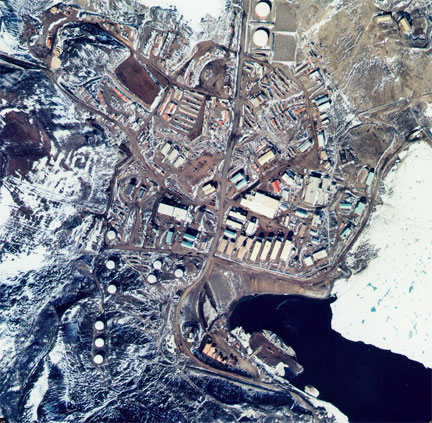 McMurdo Station, aerial photograph, courtesy of USGS
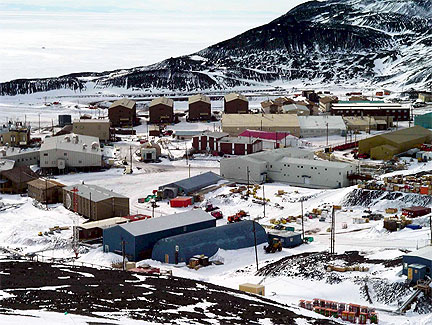 Ground view of McMurdo Station, photo courtesy of Wells Fargo Bank, N.A.
A
Raytheon Company (NYSE: RTN) team has successfully completed the third major communications upgrade at
McMurdo Station, Antarctica, in support of future scientific and environmental satellite missions. McMurdo is the largest of the three, year-round U.S.-Antarctic Program research stations. The
National Science Foundation (
NSF) manages the U.S.-Antarctic Program through which it coordinates all U.S. scientific research on the continent in addition to providing logistics support for vessels operating in the Southern Ocean. The third communications upgrade at McMurdo supports several missions that use the station for satellite downlink, including the
NASA Near Earth Network Sciences (
NENS)
McMurdo Ground Station, the
European Organisation for the Exploitation of Meteorological Satellites (
EUMETSAT) polar-orbiting
MetOp satellite mission, and the
U.S. Air Force's
Defense Meteorological Satellite Program (
DMSP).
The latest upgrade includes an increase in the off-continent communications bandwidth from 20 megabits per second outbound to 60 megabits per second, as well as the integration of an alternate downlink station in Australia to provide higher operational availability of the off-continent link. The significant increase of the available bandwidth to and from McMurdo allows additional polar-orbiting environmental and weather satellite systems to use McMurdo Station as a second downlink site. Raytheon also installed new network infrastructure to provide data routing from McMurdo to each of the NENS, MetOp and DMSP mission processing facilities. The fourth and final upgrade to the U.S. Antarctic Program's intercontinental communications servicing McMurdo Station will occur during the 2011-2012 austral summer.
Topical Tags :
Regional Tags :