Raytheon + NASA... The Difference Between Night + Day (Imagery)
[SatNews] First there was Blue Marble 2012, a stunning image of Earth taken from space by...
...Raytheon’s new Visible Infrared Imaging Radiometer Suite. Then came the White Marble, an unprecedented view of the planet’s North Pole. Now VIIRS is set to make history again with a striking night-vision image of the entire Earth. NASA will release the image on Wednesday during the American Geophysical Union conference in San Francisco, California.
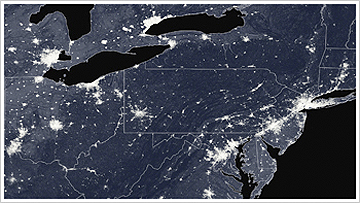 The northeastern United States at night, using the VIIRS instrument's day-night band
Image courtesy of NASA + Raytheon
The new image was made using VIIRS’ unique
Day/Night Band sensor, which can capture images in extremely low light. Earlier satellite pictures only show the pinpricks of light created by electric illumination. But VIIRS can capture low-light imagery with far greater detail, allowing it to photograph terrain, clouds, bodies of water and other features at night.
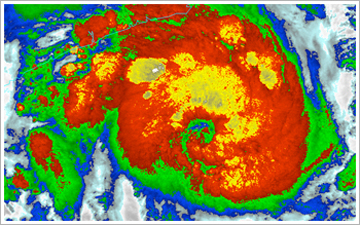 An image of Hurricane Funso, as seen from VIIRS on the Suomi NPP satellite.
“With VIIRS, we are establishing a new baseline for nighttime and low light imagery,” said
Warren Flynn, Raytheon’s director of
Environmental Sensing. Since its launch aboard the
Suomi NPP satellite in 2011, VIIRS has used its day/night capability to capture striking images of Hurricane Sandy at night, London before the 2012 summer Olympics and India during the Diwali festival. VIIRS generates data in 22 spectral bands, giving scientists unprecedented ways of looking at Earth. The information helps improve weather forecasting and disaster planning.
Readers can join Raytheon’s daily countdown to the live unveiling, relive the excitement of the VIIRS “Blue Marble” imagery and see a visual history of iconic “blue marble” photos by following @Raytheon on Twitter. Visitors to Raytheon.com will be able to download a wallpaper and screensaver of the new image after it is revealed. For more information about VIIRS and to see a slideshow of images produced by the Suomi NPP satellite, click here.
Topical Tags :
Regional Tags :