

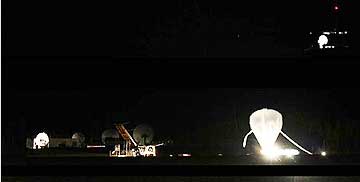
The experiment is set to launch aboard the BEXUS 11 stratospheric balloon, a high altitude flight opportunity offered to university students through joint collaboration between the European Space Agency (ESA), the German Space Agency (DLR), the Swedish Space Corporation (SSC) and the Swedish National Space Board (SNSB).
Onboard a previous launch, BEXUS 10, the I-BATE experiment successfully tracked aircraft within a range of 850km from an altitude of 29km. The team now wishes to improve on this already impressive result by monitoring how the receiver copes with very large quantities of air traffic from an increased altitude of 35km. Successful completion of this experiment could pave the way for a global space-based air traffic management system.
The BEXUS 11 flight is scheduled for launch on November 22 for which team leader Tom Nordheim will travel to the Esrange facility in Kiruna, Northern Sweden. For up-to-date information on the launch campaign please visit.
The BEXUS program (Balloon EXperiments for University Students) is realized under a bilateral Agency Agreement between the German Aerospace Center (DLR) and the Swedish National Space Board (SNSB). The Swedish share of the payload has been made available to students from other European countries through collaboration with the European Space Agency (ESA).
The following are sponsors: Kinetic Avionic Products Limited, OSEO, Celltech, Wind River, Barbara and Peter Wood, Shandy Asturias, Andrew Browne and one anonymous donor from the ISU Board of Trustees. Furthermore, the realization of this project would not be possible without the support of the following partners: ESA, DLR, SNSB, SSC, EuroLaunch, the faculty and staff at ISU, especially Dr. Angie Bukley and Mr. Paulo Esteves.