

...new Directors (Mr. S. Ramakrishnan, Mr. M. Chandradathan and Dr. M.Y.S. Prasad, respectively) from January 1, 2013.
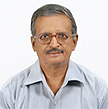 Shri S. Ramakrishnan has assumed the office of the Director, VSSC. He took over from Mr. P. S. Veeraraghavan, the retiring Director. VSSC is the lead center for the design and development of launch vehicle technologies for the Indian Space Program. Mr. Ramakrishnan joined ISRO in August 1972 and worked as member in SLV-3 Project team responsible for the development of India's first Satellite Launch Vehicle under the leadership of Dr. A.P.J. Abdul Kalam. Subsequently, he worked in the Polar Satellite Launch Vehicle (PSLV) program and was Project Director for the PSLV continuation program from 1996-2002. Under his leadership, the PSLV was operationalized, enhancing its payload capacity from 900 to 1500kg. In 2003, Mr. Ramakrishnan took charge as Project Director, Geosynchronous Satellite Launch Vehicle Mk-III (GSLV MkIII) and steered the project during the crucial phase of design, engineering and first-off hardware. He was Director (Projects) at VSSC. As Chairman, Flight Readiness Review, he played key role in accomplishing the PSLV C-11/Chandrayaan-1 Mission. Since June 2010, Mr. Ramakrishnan has headed up the LPSC, one of the lead centers of ISRO in the area of Liquid Propulsion Systems for Launch Vehicles and Spacecraft Programs. His fields of specialisation are Aerospace Propulsion, Launch Vehicle Systems and Project Management.
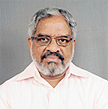 Shri M. Chandradathan is appointed as Director, LPSC, with campuses in Thiruvananthapuram, Mahendragiri and Bangalore. He took over from Mr. S. Ramakrishnan, who is appointed as Director, VSSC. He obtained his degree in Chemical Engineering from Government Engineering College, Trissur, in 1971 and M.Tech from Birla Institute of Technology in 1985. He joined ISRO in 1972. Initially, he worked for the SLV-3 Project during its design phase and later was involved in the development of solid propellant formulations for SLV-3 and over three decades, made rich contribution to the realisation of solid motors for sounding rockets, SLV-3, ASLV and PSLV. Subsequently, Mr. Chandradathan was assigned the responsibility of development and production of rocket nozzles, mainly for solid motors. From 2000 to 2004, he lead the group for ablative nozzle production, where he was responsible for the development and realisation of the 'flex nozzle' for the S200 motor, which is the strap-on booster for GSLV Mk-III. During 2002 when the core team of GSLV Mk-III was formed, he was assigned the responsibility of Project Director, S200 booster for GSLV Mk-III. Based on his vast experience in the field of solid motors, Mr. Chandradathan became Chief Executive of the existing solid propellant (SPROB) plant for making PSLV and GSLV boosters. In 2006, he was given the additional responsibility of realising the new Solid Propellant Plant (SPP), a world class solid booster production facility for making S200 solid booster, which was successfully commissioned and operationalised in 2008. In the same year, Mr. Chandradathan became the Director of the Satish Dhawan Space Centre (SDSC) SHAR. His major contributions included the enhancement of solid booster production at SPROB for multiple launches of PSLV and GSLV, realization of S200 segments for two ground tests, as well as for the first experimental mission of GSLV Mk-III, two successful ground tests of S200 boosters with identical performance, augmentation of all SDSC facilities to meet the stage preparation and vehicle integration for GSLV Mk-III, realisation of a new world class Mission Control Centre and Launch Control Centre and a large number of other new facilities to meet the future launch vehicle requirements of ISRO.
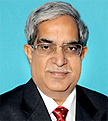 Shri M Y S Prasad has assumed the office of Director, SDSC SHAR. He took over the charge from Mr. M. Chandradathan, who has been appointed as the Director of ISRO's Liquid Propulsion Systems Centre. SDSC SHAR with two launch pads is the spaceport of ISRO. Dr. Prasad obtained his Bachelor of Engineering in Electronics and Communication from Government College of Engineering, Kakinada, Andhra Pradesh in 1974 and obtained his Doctoral Degree from Birla Institute of Technology and Science (BITS). He has a long and exceptional career in Indian Space Program, steering the various activities and Programs of the ISRO over the past four decades. He worked for almost two decades in the Launch Vehicle development programs from 1975 to 1994 and was part of the Project Team of SLV-3, the first indigenously developed launch vehicle of India. Dr. Prasad was Counselor (Space) in Embassy of India, Paris, from 1994 to 1997, during which he interfaced with all the Space Agencies and leading Aerospace Industries of European countries for ISRO's programs. He was Director of Master Control Facility (MCF) of ISRO from 1998 to 2005, which manages all Indian geostationary satellites. During his tenure, the Facilities in MCF were extensively augmented. Under his leadership, a new Master Control Facility was established at Bhopal, Madhya Pradesh. Dr. Prasad was the Director of Development and Educational Communication Unit (DECU) and Deputy Director at Space Applications Centre (SAC) responsible for SATCOM and IT Applications Area, from October 2005 to March 2008. Dr. Prasad worked as Range Operations Director for all the launches during 2008-2010, including PSLV-C11 and Chandrayaan-1. During this period, he contributed to the realization of a number of new facilities in SDSC SHAR. Dr. Prasad represented India in the United Nations Committee on Peaceful Uses of Outer Space (UN-COPUOS) and its Science and Technology Sub-Committee for eleven years (1995-2006).