Developmental prototypes of the U.S. Army's next-generation Block III Apache Attack helicopter tested emerging technologies which allow pilots to control UAVs and their sensor payloads from the cockpit of the aircraft during a so-called Limited User Test (LUT) in November at Yuma Proving Grounds, Arizona, service officials said. Through
Lockheed Martin's
VUIT 2 program, Apache pilots can already view feeds from nearby UAVs in the cockpit during flight; the technology is already being used in combat in Iraq.
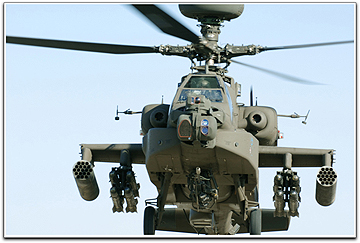
The LUT represented an effort to advance this technology and give pilots the ability to control the UAVs' payload and flight path as well, said Lt. Col.
Dan Bailey, program manager for Apache Block III. "The LUT execution is complete and the data analysis is on-going. Execution was very successful and met all the objectives for the test," said Bailey in a written statement. "Manned-unmanned teaming is the concept of interoperability," he said.
Called the
UTA (
UAS Tactical Common Data Link Assembly), the new technology enhances pilots' ability to view and control nearby UAV assets with a mind to intelligence, targeting information and overall situational awareness. Army engineers are now building the software that equips the aircraft with this next-generation capability. Using the NATO standard called
STANAG 4586, the aircraft can view and exchange images with other air and ground assets,
Bailey said.
The next step is preparing reports and documents for a
Low Rate Initial Production Defense Acquisition Board decision in April 2010,
Bailey said. Low-rate initial production of the Apache Block III is slated to begin in 2011.
Topical Tags :
Regional Tags :

