

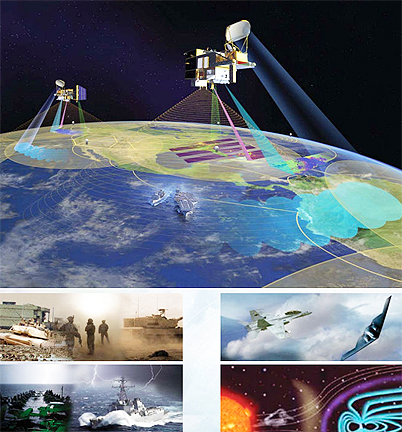
An early program planning and testing approach implemented by Northrop Grumman Corporation (NYSE:NOC) is setting a new standard for efficiency in building military weather satellites. The first of two Defense Weather Satellite System (DWSS) spacecraft is being developed and verified using the Electrical Engineering Model Testbed to conduct the Satellite Integration and Test (I&T) processes much earlier than usual. The result is significant cost savings due to early problem-solving. Risk is reduced sooner, rather than later in the I&T phase when satellite development is much further along and delays are more costly.
This approach also allows for early "test like you fly" verification of functional, performance and interface procedures. The high fidelity of the testbed plays a significant role in pathfinding for the electrical I&T and reducing risk for the subsystems. By the end of last year, the program was able to realize multimillion dollar savings on the total projected cost for the Integration and Test schedule. Early Attitude Control subsystem (ACS) testing is currently underway. The DWSS testbed is an electrical equivalent of the satellite's avionics systems, sensor interfaces and processing, and is being populated with several subsystems. The most mature is the Command and Data Handling (C&DH) subsystem, consisting of spacecraft control processors, payload support processors and data server units to store and route the science data. Flight software and flight-like engineering model hardware for the C&DH subsystem is on the testbed, simulating the communications that will occur between the orbiting satellite and the ground system.
Recently, ACS flight software and a vehicle dynamics simulator have been added to the testbed. The ACS manages satellite positioning relative to the Earth, as well as its orientation on orbit. Some of the satellite's electrical power subsystem engineering units have been delivered, including power switching units from Frontier Electronic Systems, Stillwater, Oklahoma, and remote interface units from SEAKR Engineering, Centennial, Colorado. Testbed engineers have received engineering units of the Global Positioning System receivers. Ground system flight software testing continues to advance, using a commercial off- the-shelf command and telemetry product from Raytheon Company called ECLIPSE®. It was developed by an industry team in 2007 to support both satellite flight operations and I&T. After development, the testbed will also serve as an important anomaly resolution platform, should it be needed.