The Indian Space Research Organisation (ISRO) is set to launch a "breakthrough" remote sensing satellite, RISAT, that can take pictures of Earth at night and even "see" through clouds and fog.

Bangalore-headquartered
ISRO is targeting the last week in March for launching the 1,780-kg
Radar Imaging Satellite (
RISAT) with
ANUSAT, a 35-kg micro-satellite designed by Chennai-based
Anna University. Both will be on board the indigenously built
Polar Satellite Launch Vehicle (
PSLV), which will launch from
Sriharikota. RISAT carries out operations the ISRO's previously launched satellites are unable to accomplish. Indian space scientists see RISAT as a major milestone for the country as far as remote sensing satellites are concerned. The RISAT mission will have a C-band
Synthetic Aperture Radar (
SAR) payload, operating in a multi-polarisation and multi-resolution mode.
SAR, being an active sensor, operating in the microwave range of electromagnetic spectrum, provides target parameters such as dielectric constant, roughness, and geometry, and has the unique capability for day-night imaging as well as imaging in all weather conditions, including fog and haze, and also provides information on soil moisture. The SAR payload is based on an active phased array technology using transmit/receive modules, which will provide the necessary electronic capabilities to achieve the multi-mode capability, providing spatial resolutions of three to 50 meters, and ten kms to 240 kms swath modes.
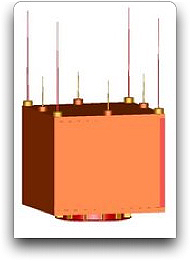
ANUSAT mission's main objective is to involve universities in building micro satellites as a means to promote and encourage intra-disciplinary technologies with ISRO's help. ANUSAT carries a digital store and forward payload for amateur communication. In addition, a number of technological payloads such as digital receiver and turbo coder, MEMS-based gyro, and magnetic field sensor are planned to be part of the payload. Structure, solar panels, chemical battery, sensors and actuators have been supplied by ISRO, while payloads and other satellite subsystems were designed and fabricated at Anna University.
(
Source: Press Trust of India)
Topical Tags :
Regional Tags :

