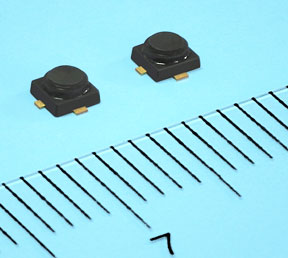
[SatBroadcasting(tm)] Renesas Electronics has made available their ultralow-noise heterojunction field effect transistor (FET) product, the NE3520S03, which features the industry-leading low noise characteristics for satellite broadcast reception applications.
The new NE3520S03 FET features a semiconductor chip with an epitaxial structure that speeds up the electron velocity and substantially reduces the source resistance. In addition, three-dimensional electromagnetic field analysis was used to improve the performance of the products at high frequencies in the gigahertz class, while a hollow plastic package was employed to allow easy replacement of Renesas Electronics’ existing NE3517S03 product. These improvements result in a noise figure (NF) value of 0.65 decibels (dB), which is 0.05 dB lower than the existing product and among the lowest in the world for a mass produced product designed for the 20 gigahertz (GHz) band. The new product enables manufacturers of antennas for satellite broadcasts to improve the reception sensitivity of their products with signals such as HDTV broadcasts.
Low-noise heterojunction FET products are used mainly in the low-noise block converter of antennas for receiving satellite broadcasts and satellite data communications. They are the key devices used to amplify the extremely weak microwave signals transmitted by satellites. A single LNB employs from three to approximately 20 low-noise heterojunction FET devices, and a lower noise figure contributes to more stable reception and a higher quality picture that is more detailed. Recently, the picture quality of TV broadcasts has risen and the number of channels has increased as digital broadcasting has become widespread worldwide. In particular, satellite broadcasting using microwave signals, which allows use of a wider bandwidth than terrestrial broadcasting, has brought advances in HD broadcasting on large numbers of channels.
Currently, the 12 GHz band is used for most satellite broadcasting. The United States, however, in 2005 became one of the first countries in the world to introduce broadcasting in the 20 GHz band, which is well suited to high-quality programming on many channels, and the market for this technology is expected to expand rapidly. In addition to providing a wider bandwidth than the 12 GHz band, satellite broadcasting in the 20 GHz band permits the use of smaller antennas because of the shorter wavelengths it uses. On the other hand, such antennas are more susceptible to the effects of weather conditions such as rain, and the need for stable reception of satellite broadcasts has lead to increased market demand for low-noise microwave semiconductor devices for use in low-noise amplifiers in converters. The new NE3520S03 FET was developed in response to such demand and provides improved low-noise performance.