

With its ceremonial acceptance of satellite control authority of the Operationally Responsive Space-1 satellite Sept. 23rd, the 50th Space Wing upped its total number of operated vehicles to 64. This SCA, however, represented a first for the wing and could signal a fundamental shift in the way satellite systems are developed. Col. John Shaw, 50th Operations Group commander, called the transfer of SCA from the Space and Missile Systems Center to the 14th Air Force and subsequently to the 50 SW, a unique opportunity to make history. "Team 8-ball is blazing a new trail with ORS-1 and we can't wait to see what the system will do," Shaw said. "We wish the team the best of success in providing intelligence, surveillance and reconnaissance capabilities for the warfighter."
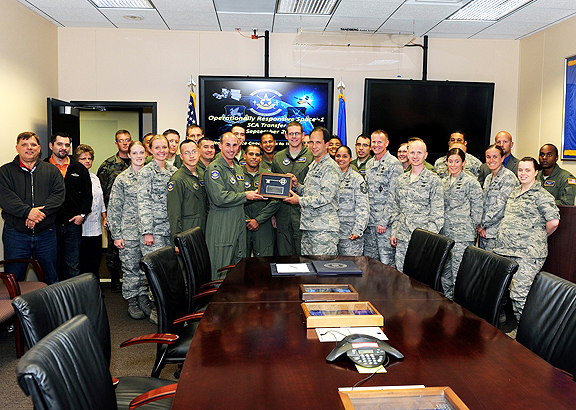
Col. John Shaw, 50th Operations Group commander, hands a cermonial key to Lt. Col. Mike Manor, 1st Space Operations Squadron commander, and Team 8-ball during the transfer of satellite control authority ceremony for Operationally Responsive Space-1 Sept. 23. (U.S. Air Force photo/Dave Ahlschwede)
Col. James Ross, 50 SW commander, officially delegated SCA of ORS-1 to the 1st Space Operations Squadron and its commander, Lt. Col. Mike Manor on Sept. 16th, following a 45-day checkout by SMC personnel. "We work hand-in-hand with our reserve squadron, the 7th Space Operations Squadron, so that's where the term (Team 8-ball) comes from," Manor said. "We are truly the sum of 1 and 7. The successful checkout of the satellite and the transfer of control authority represents a total-team effort between us here at the 50 SW, the folks at the Space Development and Test Directorate down in Kirtland, N.M. and our ATK and Goodrich contractors.
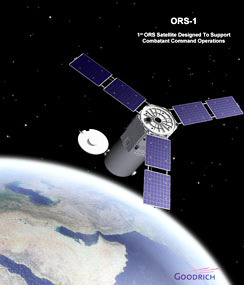
Artistic rendition of the ORS-1 satellite, image courtesy of Goodrich
The ORS-1 project stemmed from an urgent request by U.S. Central Command for additional space-based intelligence, surveillance and reconnaissance capabilities. Including on-board optics and infrared sensors — ORS-1 fills that need. "ORS-1 uses an existing ISR platform, the Senior Year Electro-Optical Reconnaissance System, which has been used with the U-2 high-altitude aircraft, as its payload," Manor said. "Team 8-ball operates both the bus and the payload, which is unique for Air Force Space Command because these types of vehicles are normally operated by the National Reconnaissance Office." With the addition of ORS-1, Team 8-ball now operates four different satellite systems including: Space Based Space Surveillance, Advanced Technology Risk Reduction and Tactical Satellite 3.