International Space University... A Stratospheric Project (Proof of Concept for Air Traffic Management)
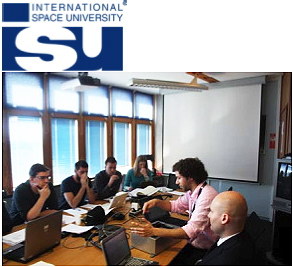 I-BATE members (right to left) Tom Nordheim and Yuval Brodsky presenting the payload to members of the BEXUS CDR panel
seated opposite. Photo credit: Richard Rieber
I-BATE members (right to left) Tom Nordheim and Yuval Brodsky presenting the payload to members of the BEXUS CDR panel
seated opposite. Photo credit: Richard Rieber (Norway),
Yuval Brodsky (Canada) and
Richard Rieber (USA) have been hard at work designing and building their experiment,
I-BATE, since their December 2009 selection.
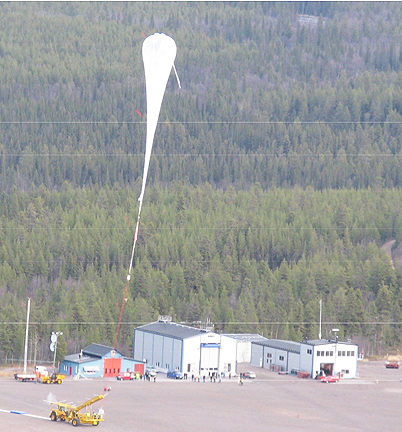 BEXUS-6 stratospheric balloon
I-BATE is a proof-of-concept experiment for space-based air traffic management. The experiment is being undertaken under the auspices of the
BEXUS program (
Balloon-borne Experiments for University Students). On May 19, 2010, the team presented their design and hardware to the
BEXUS Critical Design Review (
CDR) panel at the
European Space Agency’s
European Space Research and Technology Centre (
ESTEC) in Noordwijk, the Netherlands. The CDR panel was pleased to see the nearly completed I-BATE hardware and provided positive feedback about the entire design. The panel has encouraged the team to continue assembly, software development, and testing along with their ongoing public outreach efforts. The I-BATE team is now continuing with the final stages of design and testing in preparation for the balloon launch, which will take place in October 2010 from Esrange Space Centre near Kiruna, Sweden. I-BATE will listen to the
Automatic Dependant Surveillance-Broadcast (
ADS-B) signal that is broadcasted by each aircraft. The ADS-B signal consists of the aircraft’s position, altitude, heading, and unique identifier. The BEXUS balloon will fly at an altitude of 30-kilometres for 5-6 hours giving I-BATE the ability of tracking all aircraft within 700 kilometers. The signals will be both stored on-board and relayed in real-time to the I-BATE team on the ground. The team will use the real-time data to test two software packages for real-time aircraft tracking.
Topical Tags :
Regional Tags :

