

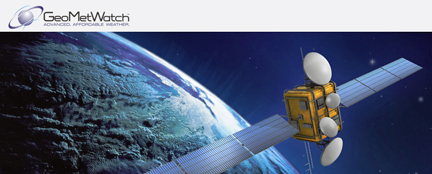
 [SatNews] The Advanced Weather Systems laboratory at Utah State University has initiated work to build...
...the first sounding and tracking observatory for regional meteorology sensor for delivery to its commercial partner GeoMetWatch. The sensor, known as STORM™, is a hyperspectral sounder that will collect and return to Earth sophisticated and critical weather data that is not currently available to weather forecasters. Procuring this data will enable forecasters to predict severe weather and atmospheric instability more effectively, resulting in earlier evacuations to increase the preservation of lives and property.
“The STORM sensor will provide unique and revolutionary weather and Earth observation capabilities that will benefit Utah, the United States and ultimately the world,” said GeoMetWatch CEO David Crain. “GMW is very excited that the Advanced Weather Systems lab at USU has begun production of our first geosynchronous sounder.”
“It is not every day that you get to start building a sensor that could dramatically impact the way in which we think about weather,” said Robert T. Behunin, USU’s vice president of commercialization and regional development and an AWS board member. “The initiation of this first sensor build is a significant milestone for Utah State University and for our USTAR Program.”
“The STORMTM sensor is a sophisticated scientific instrument that our team is uniquely suited to build,” said AWS lab director Scott M. Jensen. “We are delighted at the opportunity to build this sensor and deliver it to GeoMetWatch.”
STORM is the first in a series of sensors that AWS plans to build in the coming years. The deployment of the sensors will create a global constellation of hyperspectral sounders orbiting the Earth to provide the most accurate weather data yet. Current technologies in use are 20-plus years old and provide inadequate information. (Source: Kate Peterson, GeoMetWatch)