

...current monitoring and surveillance satellite system (SISESAT) used for verifying the industrial fishing fleet as it is considered obsolete. The new system will have a much more precise, meticulous and organized scheme. It will offer the possibility of instantly learning if a boat is crossing the permitted area and how many times the equipment has been configured.
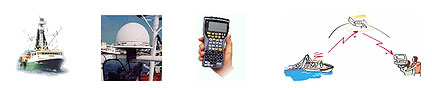
The SISESAT was created in 1993 by the then Ministry of Fisheries, and since 2004, it has been given in concession and it has been controlled by Produce. However, in recent years, its effectiveness in monitoring the sector has been questioned. In mid-February, the Ministry of Production published the Decree Bill for a new Regulation of the Satellite Tracking System and will receive citizens’s views on it until the first week of March.
The objectives of the new system are to incorporate cutting edge technology, expand the electronic control not only as to the location of the ships, but also as to their storage capacity. It also includes the incorporation of electronic logbooks for the prompt intervention to ships with problems at sea.
One of the most significant changes of the new regulation is that the costs of the SISESAT monitoring activities will be borne by the fishing permit holders and not by the Ministry. In addition, it specifies that equipment must be provided by one company and leased by fishing license holders in order to ensure the standardization of the equipment and to facilitate the monitoring task. Furthermore, thanks to the access the Ministry will have to the satellite equipment configuration (either in person or remotely) of the ships, it will be possible to find out how many times this has been configured.
Another innovation of the regulation is that it includes the use of bidirectional technology in the vessels as the current monodirectional ones prevent the Ministry from requesting positioning signals from the ships when their satellite signal is not received. As for the vessel positioning message emission frequency, these must be generated and transmitted every 30 minutes when the boat is out of port and at least every three hours when in port. (Source: FIS, Silvina Corniola)