NASA... Sail Ho! (Satellite)
[SatNews] On Dec. 6 at 1:31 a.m. EST, NASA, for the first time, successfully ejected a nanosatellite from a free-flying microsatellite.
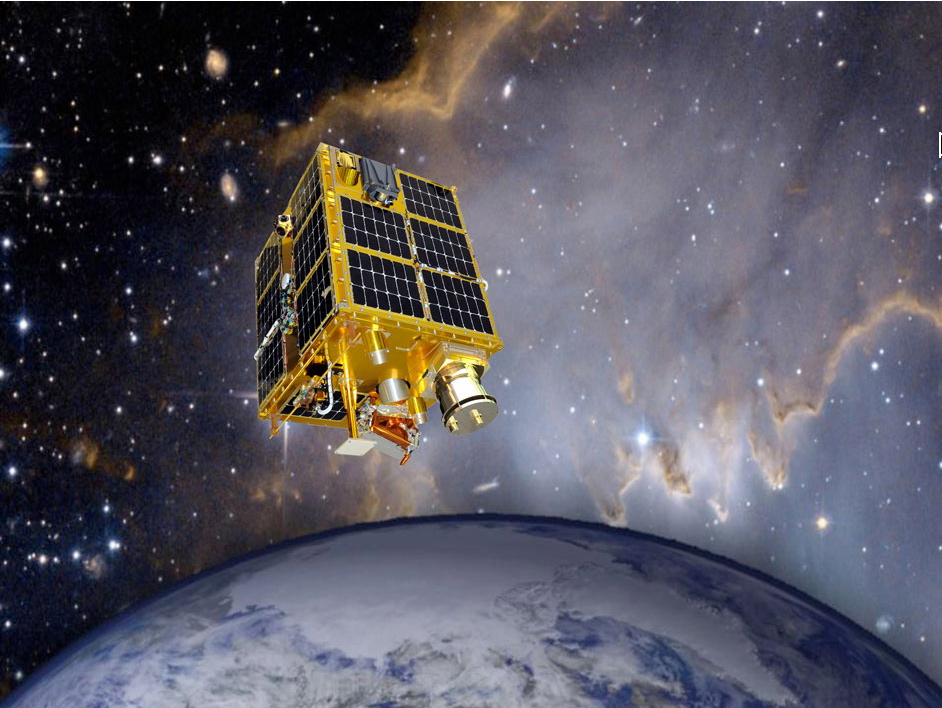
FASTSAT
ejected from the
Fast, Affordable, Science and Technology Satellite,
FASTSAT, demonstrating the capability to deploy a small cubesat payload from an autonomous microsatellite in space. Nanosatellites, or cubesats, are typically launched and deployed from a mechanism called a
Poly-PicoSatellite Orbital Deployer (
P-POD) that's mounted directly on a launch vehicle. This is the first time NASA has mounted a P-POD on a microsatellite to eject a cubesat. FASTSAT, equipped with six science and technology demonstration payloads, including
NanoSail-D, launched Friday, Nov. 19 at 8:25 p.m. EST from Kodiak Island, Alaska. During launch, the NanoSail-D flight unit, about the size of a loaf of bread, was stowed inside FASTSAT in a P-POD.
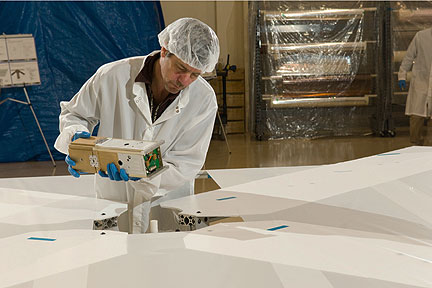
Doug Huie, research technician at the University of Alabama in Huntsville, carefully sets the NanoSail-D satellite on a specially constructed surface designed for deployment testing. The spacecraft measures 4 inches wide, 4 inches deep and 13 inches long, roughly the size of a loaf of bread, and weighing about 9 pounds.
Photo credit: NASA/MSFC/D. Higginbotham
The NanoSail-D flight results will help to mature this technology so it could be used on future large spacecraft missions to aid in de-orbiting space debris created by decommissioned satellites without using valuable mission propellants. After ejection, a timer within NanoSail-D will begin a three day countdown as the satellite orbits the Earth. Once the timer reaches zero, four booms will quickly deploy and the NanoSail-D sail will start to unfold to a 100 square foot polymer sail. Within five seconds the sail fully unfurls. If the deployment is successful, NanoSail-D will stay in low-Earth orbit between 70 and 120 days, depending on atmospheric conditions. NanoSail-D is designed to demonstrate deployment of a compact solar sail boom system that could lead to further development of this alternative solar sail propulsion technology and FASTSAT's ability to eject a nanosatellite from a microsatellite — while avoiding re-contact with the FASTSAT satellite bus.
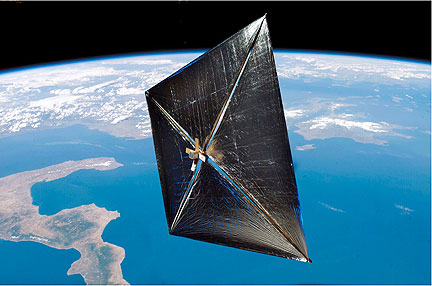
NanoSaild-D cubesat.
Image courtesy of NASA
NanoSail-D was designed and built by engineers in Huntsville and managed at the Marshall Center with technical and hardware support from NASA's Ames Research Center in Moffett Field, Calif. This experiment is a combined effort between the Space and Missile Defense Command, Von Braun Center for Science and Innovation, both located in Huntsville, Ala. And NASA. FASTSAT launched on the
STP-S26 mission, a joint activity between
NASA and the
U.S. Department of Defense Space Test Program. The satellite was designed, developed and tested at the
Marshall Center in partnership with the
Von Braun Center for Science & Innovation and Dynetics Inc. of Huntsville. Dynetics provided key engineering, manufacturing and ground operations support for the new microsatellite. Thirteen Huntsville-area firms, as well as the
University of Alabama in Huntsville, also were part of the project team.
Topical Tags :
Regional Tags :

