

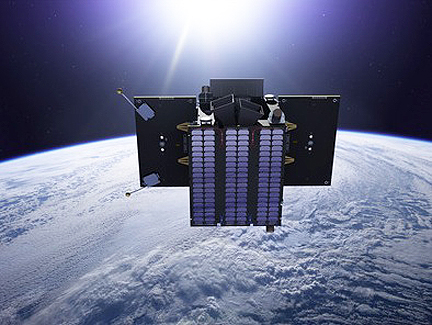
Proba-2 is flight-testing a total of 17 technology demonstrators for future ESA missions. It also serves as a scientific platform for solar and space weather observations.
Credits: ESA/Pierre Carril
ESA’s Proba-2 microsatellite is a good example: an influx of nitrogen has replenished its fuel tank, in the process demonstrating a whole new space technology. On August 16th, a telecommand was sent from ESA’s Redu ground station in Belgium to boost the gases in Proba-2’s unusual ‘resistojet’ engine. Used to maintain the microsatellite’s orbit at 600 km altitude, this experimental engine runs on xenon gas heated before ejection to provide added thrust. The command added nitrogen gas to the fuel tank, bringing its pressure close to its launch level.
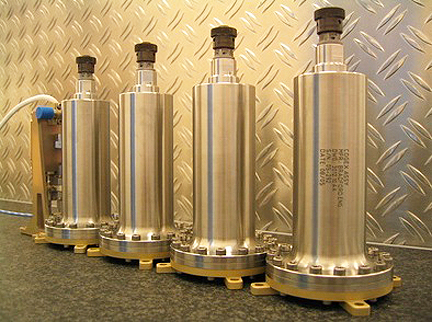
Four cool-gas generators aboard Proba-2 serve to repressurise the microsatellite's resistojet engine by producing nitrogen from solid propellant. The cannisters require no pressurisation or maintenance and can be stored for years at ambient temperature.
Credits: TNO
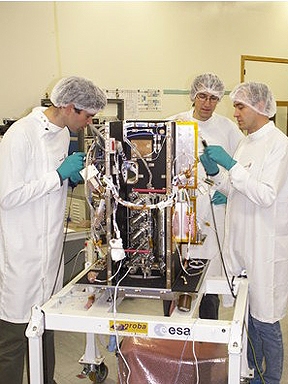
Integrating TNO's four cool-gas generators aboard Proba-2
Credits: TNO
TNO designed the Proba-2 cool-gas experiment in close cooperation with Netherlands-based Bradford Engineering, responsible for constructing it. The resistojet design came from U.K. company Surrey Satellite Technology Ltd., while the experiment was integrated with the satellite by Belgium's QinetiQ Space. The technology had been fast-tracked for space by the Dutch National Space Office as part of ESA’s General Support Technology Program, supporting the development of promising prototypes into flight-ready hardware.
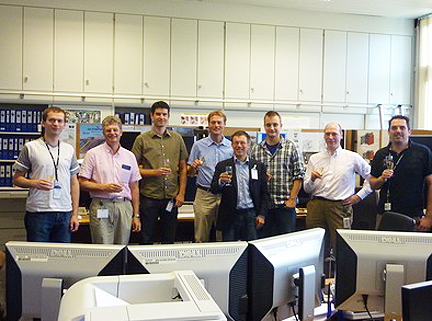
A TNO team celebrate the success of Proba-2's COGEX (Cool-Gas Experiment). On 16 August the ESA's satellite's xenon resistojet engine tank was topped up with gaseous nitrogen released from a store of solid propellant
Credits: TNO
Proba-2 is the latest in ESA’s Project for Onboard Autonomy series of satellites, dedicated to the in-orbit demonstration of innovative technologies. Proba-2 was launched on November 2, 2009. Less than a cubic metre in volume, it carries a total of 17 new technologies and four science payloads focused on the Sun and space weather.