

...a Memorandum of Agreement with the TERC to provide a $300,000 investment that will greatly improve the process for attaining on-orbit photography from the ISS, as well as use of Earth images for scientific research and education. TERC, an education non-profit, in collaboration with the Association of Space Explorers (ASE) will enhance and adapt the Windows on Earth software for use by astronauts to replace the current multi-step process for targeting, photographing and geo-referencing images.
Windows on Earth was originally developed by TERC with funding from the National Science Foundation as an educational tool for use in museums and it is currently installed at the National Air and Space Museum, Boston Museum of Science and several other museums. Astronaut members of the ASE recognized the potential of the simulation software to assist astronauts on the ISS and in 2008, a beta version was piloted on orbit. The agreement with CASIS allows for the full development of the integrated tool for permanent use on the ISS.
“Windows on Earth will provide cutting-edge, next generation tools for the Earth observation program. It will help scientists and astronauts select and photograph targets, and will enhance use of these photographs in research and education.” said Dan Barstow, TERC Principal Investigator for the Windows on Earth project.
Earth observation is an essential part of ISS science research. This software will provide critically important improvements to current tools by providing more accurate simulations of Earth views from ISS windows, and it will automatically link targets selected by scientists on the ground into the on-orbit software. These improvements will enable astronauts to photograph more high-priority targets and help scientists more readily use the photographs in their research. In addition to their scientific value, many Earth images are compelling, informative, and engaging resources for education and public use. To that end, the CASIS/TERC agreement also includes support for enhanced public access to images via a user-friendly portal at Windows on Earth website (winearth.terc.edu). These NASA images will live in the public domain and will be provided at no cost to users.
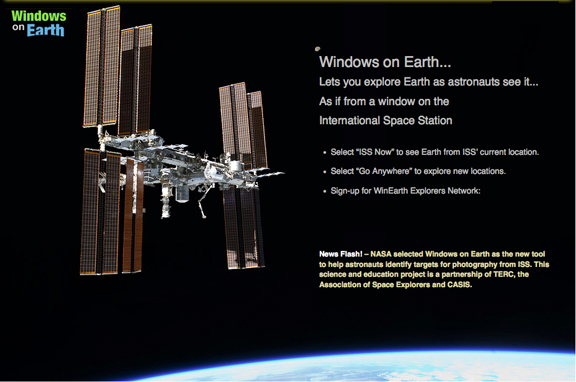
The project team will work closely with astronauts on the ISS and with NASA’s Crew Earth Observation (CEO) team that manages ISS-based Earth observation initiatives, integrating this new tool into the current process. The software will be ready for deployment and astronaut use by December 2012. CASIS supports use of the ISS National Lab for science research, education and public outreach. This includes Earth observation through the capture and broad use of high quality images of Earth and space.
“The ISS U.S. National Lab is our Nation’s most unique research platform, and providing high-quality imagery of the Earth and space from this platform for scientific and educational use will greatly increase the potential for finding solutions to some of mankind’s greatest challenges,” said CASIS Interim Executive Director Jim Royston. “The new Windows on Earth software will enable astronauts to photograph many more targeted images than ever before. We are excited to have the opportunity to enable such technology for the benefit of humankind.”
The Association of Space Explorers (ASE), an international nonprofit professional association of astronauts and cosmonauts, has worked closely with TERC on the development of the orbital version of Windows on Earth and will continue to support deployment and utilization of the software once onboard the ISS.