

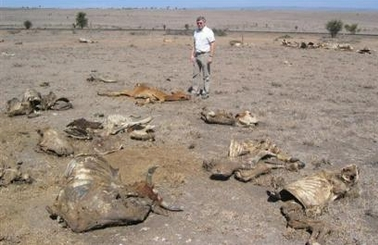
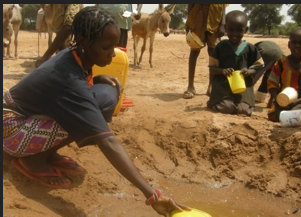
Since 2011, the region of East Africa has been hit by one of the most devastating droughts in its history, after two seasons of lack of rainfall which led to agricultural shortages and dramatic losses of cattle. A state of famine, threatening more than 13 million people, has been declared by the UN and humanitarian organizations.
The unstable region of the Horn of Africa, and East Africa as a whole, experiences recurrent crises and a severe shortage of the telecommunication facilities and resources necessary for a proper emergency response. Such an environment is an obstacle to humanitarian aid for the target populations. Thus, there is a vital need for capacity building for emergency agencies on the ground to improve the impact of their response in any crisis.
TSF experts intervened in Kenya following the food crisis that hit the country in 2012 and made telecom assessments to identify the needs of humanitarian workers and refugees, and offered free calls to victims. The TSF teams also established an internet connection to benefit the NGO VSF Belgium to optimize its work with affected people.
This week, for the second time in Africa, TSF, thanks to the financial support of the European Commission's Humanitarian Aid and Civil Protection department (ECHO), is carrying out ICT training for East-African humanitarian organizations involved in emergency response. The training session has begun in Nairobi, Kenya on June 17, 2013.
This fourth and final session is part of the overall program run by TSF throughout 2013. The previous three workshops were held in Bangkok, Thailand in March, in Managua, Nicaragua and in Dakar, Senegal in May. The main purpose is to increase the capacity of humanitarian emergency agencies in East Africa.
Nairobi training is receiving 25 participants representing 17 international organizations involved in emergency response in 7 East-African countries: DRC, Ethiopia, Kenya, Somalia, South Sudan, Sudan and Zimbabwe. The program of this session includes theoretical and practical courses in telecommunications management in crisis situations and in the use of various ICT tools, as well as a practical simulation exercise of a communications deployment in an emergency.
The objective of these training sessions is to train humanitarian workers to be able to pass the skills to their organization and their local partners, thus improving the effectiveness of their response to affected populations. At the end of this training program, TSF will remain available for a year to provide remote support through an interactive web portal of technical support ICT Relief that aims to increase the reactivity and effectiveness of relief efforts.
Télécoms Sans Frontières is the leading humanitarian NGO specialized in emergency telecommunications with a 24-hour monitoring center and operational bases in Europe, Central America, Asia, and its representation in Washington. Télécoms Sans Frontières (TSF) crews of IT and telecoms specialists can intervene anywhere in the world in less than 24 hours. After a sudden onset disaster or conflict, they can set up in a matter of minutes a satellite-based telecoms centre offering broadband Internet, phone and fax lines. TSF runs humanitarian calling operations to offer support and assistance to affected civilians, giving them a link with the outside world from which they would be otherwise completely cut off. Beyond emergency response, TSF is also engaged in ongoing prevention and development programs, including technology centers for local populations, and support to projects in collaboration with stakeholders from multiple sectors (health, agriculture, education). TSF also organizes general training sessions in emergency telecommunications for other relief organizations and national disaster response agencies in order to reinforce the efficiency of humanitarian action worldwide.