

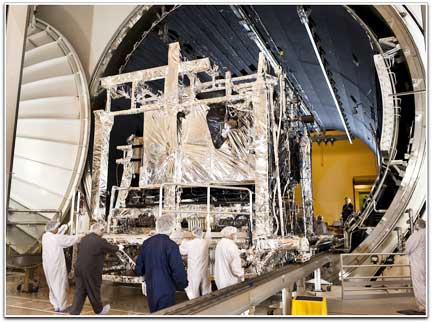
SBIRS (GEO-1) testing. Photo courtesy of Lockheed Martin
The CDITL test integrated several geographically separated sites used for command and control, factory engineering support and direct interface to mission data users. The 17-day test included the use of high fidelity spacecraft simulators to complete the launch and early orbit test processes and products that will be used for the GEO-1 launch. Each site contributed significantly to the observed stability, robustness and operability of the SBIRS system. Completion of the ground segments verification process and the CDITL led to the readiness milestone, known as the System Integration Readiness Review. This event, completed Jan. 12, officially moves the ground segment into the next level of integration. The Sunnyvale-based System Engineering, Integration and Test group formally accepted SBIRS’ approved completed ground component delivered for system level integration to include multiple end-to-end test and rehearsal events with space vehicle simulators and the GEO-1 vehicle itself. This series of events are the final efforts leading to system operations readiness for launch of the GEO-1 space vehicle.
The first SBIRS GEO spacecraft recently completed thermal vacuum testing, the most comprehensive and the largest risk mitigation component of the integrated spacecraft environmental test program. The satellite is planned for delivery to Cape Canaveral Air Force Station in late 2010 where it will then undergo final processing and preparation for launch aboard an Atlas V launch vehicle. SBIRS will deliver unprecedented, global and persistent infrared surveillance capabilities by providing early warning of missile launches and simultaneously support other missions including missile defense, technical intelligence and battlespace awareness.