

This latest accomplishment follows closely on a series of recent successes for SpaceX. In November 2008, SpaceX successfully conducted a full mission duration firing of Falcon 9, validating SpaceX's use of nine engines on the first stage, as well as the ability to shut down engines without affecting the remaining engines. In December 2008, NASA selected the Falcon 9 launch vehicle and Dragon spacecraft as the primary means of transporting cargo to and from the International Space Station after the Space Shuttle retires in 2010.
Satnews Daily
January 12th, 2009
Falcon 9 Is Vertically Challenged, Dragon Delighted
Space Exploration Technologies' Falcon 9 launch vehicle was successfully raised to its vertical position on Saturday, January 10, 2009, at Space Launch Complex 40 (SLC-40) in Cape Canaveral, Florida — that's two days ahead of schedule!
 This operation was a crucial step in validating numerous system interfaces and launch processes in preparation for the Falcon 9's maiden flight later this year. “Any engineered system has requirements that can only be recognized through actual assembly of real hardware,” stated Brian Mosdell, Director of Florida Launch Operations for SpaceX. “This rapid integration and stand-up provided our engineers and technicians with invaluable insights that will greatly streamline our efforts towards the first Falcon 9 launch in 2009.”
 SpaceX completed the Falcon 9 vehicle integration in a horizontal position on December 30, 2008. After integration, Falcon 9 was lifted and mated to a transporter erector system, designed and built by SpaceX, which carried the 17 foot diameter, 180 foot long rocket to the launch pad. On January 10, 2009 at 12:45 PM EST, SpaceX began the process of raising Falcon 9 and approximately 30 minutes later, Falcon 9 stood vertical at the Cape. "This entire process has helped us validate key interfaces and operations prior to executing our launch campaign with the vehicle in its final flight configuration,” said Elon Musk
, CEO and CTO of SpaceX. “We encountered no show-stoppers or significant delays. I am highly confident that we will achieve our goal of being able to go from hangar to liftoff in under 60 minutes, which would be a big leap forward in capability compared with the days to weeks required of other launch vehicles.”
This latest accomplishment follows closely on a series of recent successes for SpaceX. In November 2008, SpaceX successfully conducted a full mission duration firing of Falcon 9, validating SpaceX's use of nine engines on the first stage, as well as the ability to shut down engines without affecting the remaining engines. In December 2008, NASA selected the Falcon 9 launch vehicle and Dragon spacecraft as the primary means of transporting cargo to and from the International Space Station after the Space Shuttle retires in 2010.
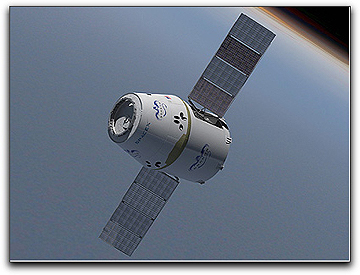
Select this graphic for additional information...

This latest accomplishment follows closely on a series of recent successes for SpaceX. In November 2008, SpaceX successfully conducted a full mission duration firing of Falcon 9, validating SpaceX's use of nine engines on the first stage, as well as the ability to shut down engines without affecting the remaining engines. In December 2008, NASA selected the Falcon 9 launch vehicle and Dragon spacecraft as the primary means of transporting cargo to and from the International Space Station after the Space Shuttle retires in 2010.